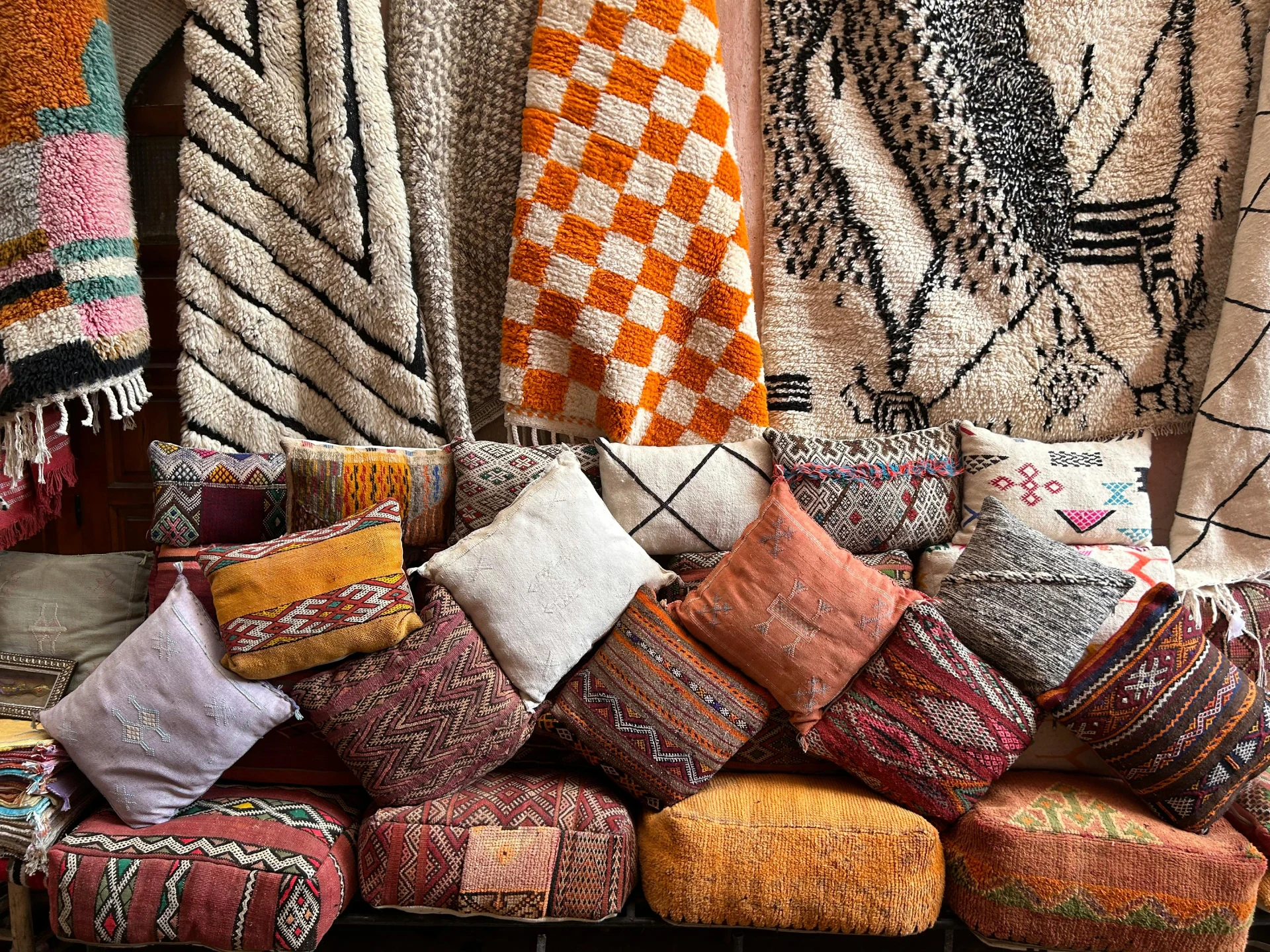
A Tapestry of Comfort: Cushions in Every Style and Shade
At Pars Rug Gallery, we believe a cushion is never just a cushion — it’s a work of art, a conversation starter, and the finishing


In the world of rug restoration, there are moments that feel like pure privilege—moments when a piece arrives not just as a textile, but as a living testament to a century of culture, artistry, and heritage.
Such was the case when Dr. Taher Sabahi, one of the most respected independent anthropologists in Persian and Oriental rugs and carpets, entrusted us with a true masterpiece from his personal collection: a Persian Tribal Afshar rug, more than 130–140 years old.


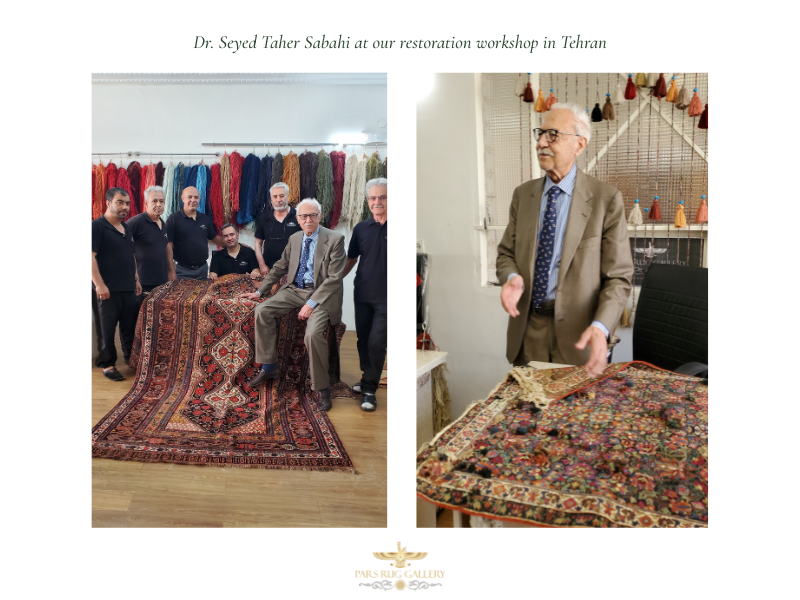
Born in Tehran in 1940 and educated in Italy, Dr. Sabahi is a writer, journalist, and scholar specializing in carpets and handwoven textiles. Over the course of six decades, he has authored over twenty books, lectured at universities and museums worldwide, and served as the editor-in-chief of Gereh—an international magazine dedicated to carpets and textiles. Recognized by institutions from Tehran to Tokyo, he is not only an academic but also the custodian of a world-renowned collection of antique weavings, exhibited in prestigious museums across the globe.
His research has shaped modern understanding of Persian and nomadic weaving traditions, and his curatorial work—through both publications and exhibitions—has preserved countless cultural narratives for future generations. To this day, he remains an influential figure in the global carpet community, known for his exacting eye and deep respect for the craft.
Entrusting us with this rare Afshar masterpiece was both an honor and a testament to Dr. Sabahi’s confidence in our expertise. This was not merely a restoration—it was an act of stewardship over a century of history. Our work was to breathe new life into a textile that had already endured for more than a hundred years, preserving its legacy so it can continue telling its story for the next century and beyond.

The Afshar are historically one of the 24 Oghuz Turkic tribes, whose nomadic confederations roamed Central Asia in the medieval period.
Although their linguistic roots are Turkic, their homelands lay within the Greater Iranian cultural and political sphere — an expanse that, in antiquity and the early medieval era, included much of present-day Iran, Afghanistan, Turkmenistan, and Central Asia.
From the Achaemenid Empire (6th–4th centuries BCE) through the Parthian and Sassanian dynasties, these regions were linked by Iranian governance, trade, and culture. Even after the arrival of Turkic groups in the early Islamic centuries, the political and cultural dominance of Iran persisted, shaping the institutions, art, and urban life of the steppe-plateau frontier.

The Afshar migration deeper into the Iranian plateau, accelerated under the Seljuks (11th–12th centuries) and later enforced strategically by Shah Tahmasp I of the Safavid dynasty (16th century), brought them into permanent settlement in provinces like Kerman, Yazd, and Khorasan.
Once in Iran proper, their exposure to Persian urban centers, administrative systems, and artistic traditions profoundly influenced their identity. They adopted many elements of Iranian material culture, from architecture to dress and, most prominently, the Persianate art of carpet weaving. Over generations, many Afshar communities transitioned to speaking Persian, while preserving certain tribal customs and oral traditions.
Cultural & Political Belonging
Today, the Afshar are both geopolitically and culturally Iranian:

Afshar rugs originate from weaving hubs such as Shahr-e Babak, Sirjan, Baft, Rabor, and western Jiroft, with nomads in the Sirjan–Baft plains producing highly prized tribal pieces sold in the Sirjan bazaar. Traditionally woven with the Turkish (symmetrical) knot at 15–25 knots per 7 cm, these rugs often feature cotton warps and wefts (older ones use wool), two wefts of varying thickness sometimes with a red-dyed thick weft—and horizontal ground looms for portability.
Designs blend bold Turkic geometry with southern Iranian influences, showcasing motifs like Gol Hashemat, Aabri (cloudband), Do Gol Parizi, Se Kalleh, Monbari, and others, each carrying symbolic meaning such as protection, fertility, balance, and spiritual connection; birds, trees, and cloudbands link to nomadic beliefs and Silk Road heritage. The palette favors rich madder red, deep indigo, warm brown, cream, black, and navy, with older natural-dye pieces showing a harmonious, matured tonality.

While its beauty was undeniable, the rug’s long journey through time had left visible scars. Decades of foot traffic, shifting climates, and everyday use had worn away much of its pile and weakened its foundation, leaving certain areas threadbare. Once-vivid patterns had faded almost entirely, with only faint shadows of the original design lingering across the exposed warp and weft — a ghostly reminder of its former glory.
Fringes and edges were frayed and broken, compromising both the rug’s appearance and its structural stability. The piece had lost much of its original tension, causing an overall weakness that made it vulnerable to further damage. Despite its fragile state, the rug still carried the soul and artistry of its maker — a testament to both the craftsmanship that birthed it and the century of life it had endured.

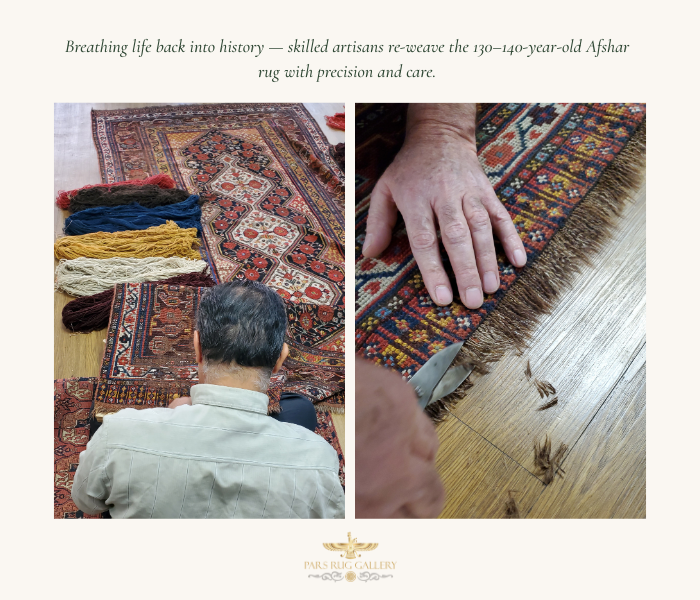

The restoration of this rare Persian Tribal Afshar rug was a complete renewal from foundation to fringe. Over four months, a team of three to four skilled restorers worked tirelessly to bring it back to life while staying true to its original craftsmanship. The entire rug was re-woven and re-piled using the traditional symmetrical knot, each one hand-knotted with precision to match the original weave.
Every strand of wool used in the restoration was naturally dyed by master dyers, replicating the authentic hues used by Afshar weavers more than a century ago. This careful dyeing process not only matched the original tones but also revived the rug’s depth and warmth of color—transforming faded shadows into rich, vibrant patterns once again. The infusion of fresh, naturally dyed wool breathed life into the design, allowing the intricate motifs to stand proud as they did in their earliest days.
Damaged fringes and edges were rebuilt and reinforced to secure the structure for generations to come. Worn areas where the pile had been reduced to the foundation were painstakingly repiled, so the design once again flowed without interruption. Finally, the rug underwent a gentle cleaning to restore its brilliance, revealing the full beauty of its tribal symbols and intricate detailing.
This was not simply a repair—it was a complete cultural and artistic revival, carried out with deep respect for the Afshar weaving tradition and the legacy of the weaver who created it more than a century ago.
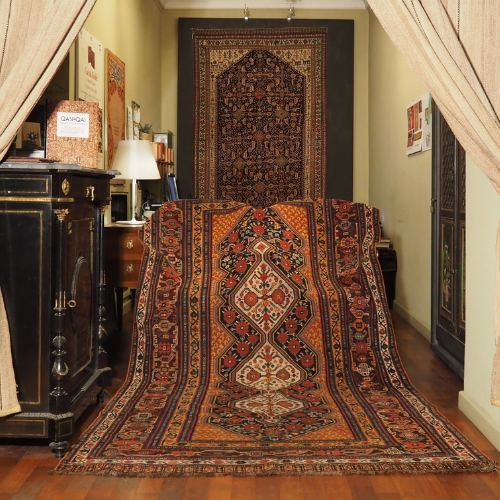
When the final knots were tied and the last fringe secured, the transformation was nothing short of remarkable. The once-fragile Persian Tribal Afshar rug now stood strong and vibrant, its intricate motifs restored to their original clarity and its structure fortified for decades to come. The naturally dyed wool brought back the depth and richness of color, allowing the patterns—once faded to mere shadows—to shine once again.


Seeing the rug in its renewed state was more than a technical triumph—it was an emotional moment. This was a piece that had already lived for over a century, survived countless journeys, and carried the heritage of the Afshar weaving tradition. Now, it was ready for another hundred years, preserved both as a work of art and as a cultural treasure.
To have this 130–140-year-old masterpiece return to Dr. Seyed Taher Sabahi’s Ghalibaf Gallery in Turin, Italy, was the perfect conclusion to its restoration journey. Knowing that it would once again be admired by collectors, historians, and visitors from around the world made every hour of meticulous work worthwhile.
If you have an antique rug that deserves expert care, our restoration team can help bring its beauty and integrity back to life—preserving your piece of history for generations to come. Contact us today to discuss your restoration project.
At Pars Rug Gallery, we believe a cushion is never just a cushion — it’s a work of art, a conversation starter, and the finishing
In the world of rug restoration, there are moments that feel like pure privilege—moments when a piece arrives not just as a textile, but as
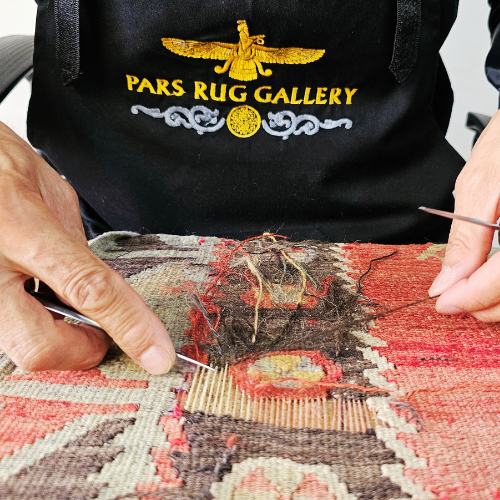
At Pars Rug Gallery, we regularly receive rugs that have journeyed through generations—each one carrying not just fibers and knots, but history, memory, and value.
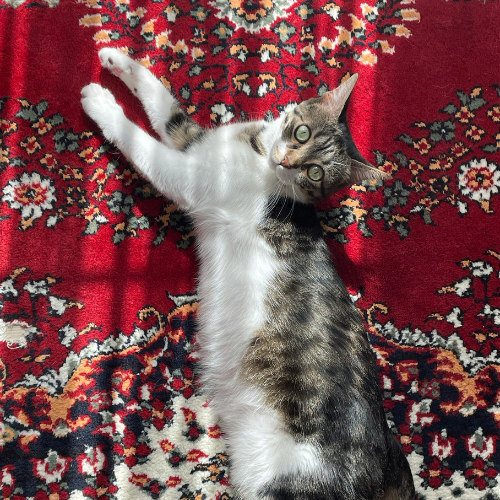
Rugs possess not only aesthetic beauty but also historical and artistic significance. Whether a timeless Persian heirloom, a finely woven modern piece, or a striking

In the refined setting of a well-appointed home, a rug does far more than simply cover the floor—it becomes a canvas of comfort, character, and