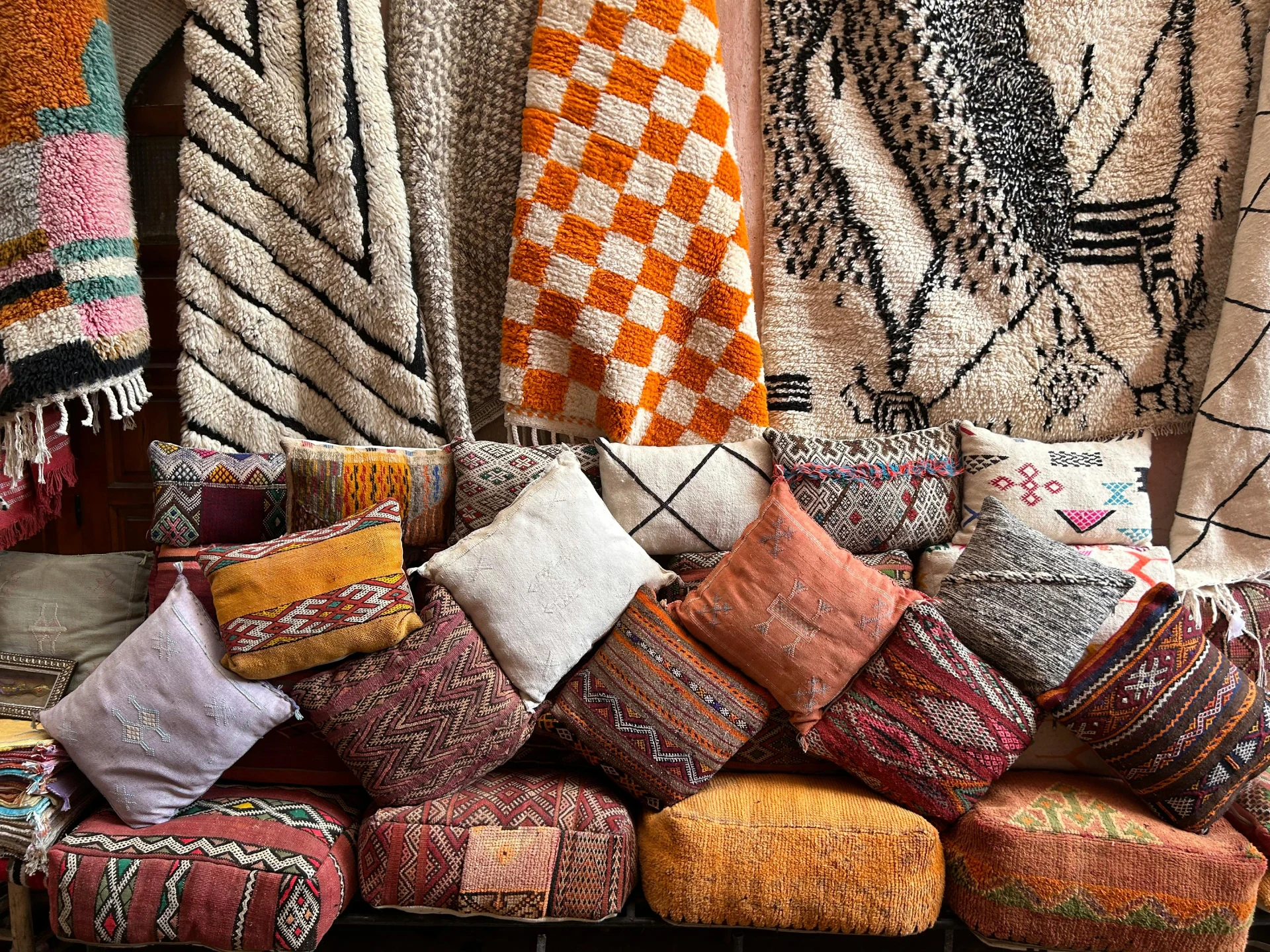
A Tapestry of Comfort: Cushions in Every Style and Shade
At Pars Rug Gallery, we believe a cushion is never just a cushion — it’s a work of art, a conversation starter, and the finishing


At Pars Rug Gallery, we regularly receive rugs that have journeyed through generations—each one carrying not just fibers and knots, but history, memory, and value. When this antique Persian Bakhtiari rug arrived at our workshop, it was clear that we were handling a piece of woven history. Estimated to be at least 120 years old, this wool and cotton rug was both rare and exceptionally crafted, yet time, environment, and neglect had taken a heavy toll.

The rug’s overall structure was compromised. Both sides were extensively frayed, and the edges—what we refer to as the rug’s “frame”—were completely damaged, no longer able to support the integrity of the weave. The fringes on both ends had deteriorated significantly, and the stopper—the transitional binding line that separates the fringe from the body of the rug—was entirely missing. This loss made the rug appear visually and structurally uneven, contributing to further tension and distortion along its length.
One of the most visible areas of concern was a large hole created by a structural cut in the rug, which had gone untreated for a significant time. This allowed threads to unravel and surrounding areas to weaken. Compounding the damage, moth infestation had compromised both the pile and parts of the foundation, leaving several sections unstable and brittle. Upon closer inspection, we discovered visible moth larvae nestled in the wool—clear evidence of an active infestation. This had already resulted in substantial damage to both the pile and sections of the foundation, particularly along the sides and corners.
In fact, nearly 60% of the rug’s surface had worn down to the point where the foundation was fully visible—a result of long-term friction, footfall, and neglect. In some areas, the foundation itself had begun to rot, particularly near the edges and corners where moisture may have accumulated. The rug’s once-vivid natural dyes had faded unevenly, further obscuring its intricate design and deepening the sense of loss.


This was not a case for surface cleaning alone. The rug demanded a comprehensive, multi-stage restoration—including deep hand washing, moth-proofing, edge and end reconstruction, foundation stabilization, and careful reweaving to match the original motifs and knotting techniques. Above all, our objective was to preserve the authentic character of this Bakhtiari rug, allowing it to once again be admired, used, and passed down with pride.
At Pars Rug Gallery, every restoration is approached with discipline, care, and deep respect for the rug’s origin. We do not outsource or mechanise any part of our restoration work. Every step, from cleaning to reweaving, is carried out by mostly hand—using traditional methods passed down through generations. Below, we describe the key stages involved in the restoration of this antique Persian Bakhtiari rug, a unique wool-and-cotton piece that arrived in an advanced state of deterioration.

When this rug arrived in our workshop, the first step was a thorough inspection carried out by our team of specialists, each with decades of experience in their respective fields. The foundation expert assessed the structural integrity, our pile and dye specialists examined wear, fading, and colour stability, while the finishing and edging expert evaluated the rug’s borders and ends. Inch by inch, the rug was checked for previous repairs, insect activity, dry rot, water damage, and signs of distortion.
Once every specialist had completed their evaluation, we gathered the findings to determine the most suitable restoration approach. As part of our process, we photographed and filmed all areas of concern, creating a detailed record of the rug’s condition on arrival. These images not only guided our work but also gave the client complete clarity on what needed to be done, why it was necessary, and how the rug would be transformed.
This initial stage is critical—it ensures we respect the rug’s history while making informed decisions about its future. By combining expert insight with careful documentation, we lay the foundation for a restoration that is both technically precise and true to the spirit of the original weaving.
Before cleaning began, we tested the dyes to understand their type and stability. As this antique rug was naturally dyed—common in its era before the invention of chemical dyes—we tailored our approach to prevent colour bleeding. Using a combination of protective treatments and controlled washing methods, we ensured the colours stayed true.
The wash itself was deep yet gentle, using pH-balanced natural soap formulated for antique wool and cotton. Sensitive areas were cleaned entirely by hand, while sturdier sections went through our flat-bed washing equipment for an even cleanse. Multiple cold-water rinses removed all residue, and the rug was dried flat in a climate-controlled space to preserve its shape and colour. As it dried, the original, rich palette re-emerged from beneath years of dust and grime.

During inspection, active moth larvae were visible in several areas of the rug, confirming an ongoing infestation. Left untreated, this would have led to further damage. We applied a non-toxic moth-proofing solution, brushing it deep into the pile to penetrate the areas where eggs or larvae could be hidden. The solution not only kills any live infestation but also leaves a protective barrier that deters future activity. In tandem with this, we applied a gentle fibre-conditioning treatment to restore softness to the wool, which had become brittle in many areas. These steps were crucial in ensuring the rug could be safely handled and worked on during the subsequent stages of repair.
This particular rug had several areas where the foundation—especially along the edges and corners—had worn away or rotted. Rebuilding the foundation is one of the most delicate tasks in restoration and must be performed by hand to maintain the rug’s original tension and weave structure. Using cotton threads of matching gauge and twist, we recreated missing sections of the warp and weft. These were anchored securely to the existing structure and extended into areas where piles would later be re-knotted. Without this stabilisation, no surface restoration would hold. This underlying work is largely invisible when the rug is complete, but it is essential for long-term preservation.

Both ends of the rug were severely damaged, with the stopper—an essential band between the main field and the fringe—completely missing. This made the rug structurally unstable and visually uneven. We rebuilt the stopper lines by hand, matching the weave density and incorporating them naturally into the remaining structure. The fringes, once completely disintegrated, were re-knotted with cotton yarns chosen to reflect the original tone and twist. Along the sides, the selvedges were entirely reconstructed using hand-spun wool. These were wrapped tightly and consistently, restoring the edge tension that helps the rug maintain its rectangular shape. Each step was completed with hand tools and guided by reference to original techniques.
The rug had a large hole caused by a structural cut and surrounding wear. Once the foundation was rebuilt, we re-knotted the missing pile by hand, using the same knot type as the original—likely a Persian (asymmetrical) knot, typical of Bakhtiari rugs. Each knot was tied individually, matching the size, angle, and pattern direction of the surrounding motifs. The wool we used was hand-dyed in our workshop to replicate the faded tones of the original, ensuring that the restored area would blend naturally without appearing artificially “new.” This work was slow and highly detailed, with constant reference to the surrounding field to preserve the character of the rug’s design
After all structural repairs were complete, the rug underwent final blocking. This involves gently stretching and aligning the rug by hand to restore its natural proportions and eliminate the warping caused by years of damage and uneven tension. The pile was brushed and lightly sheared to create an even surface, allowing both the original and restored sections to blend seamlessly. No part of this finishing was machine-assisted. Our team works with hand shears, brushes, and wooden blocking frames to preserve the tactile softness and integrity of the rug.


Restoration is not simply about repair—it is a discipline that bridges art and science. At Pars Rug Gallery, we consider it a privilege to preserve these woven heirlooms for the next generation. If you are considering professional care for your rug, we welcome you to get in touch with our experienced team.
Our 40 years in business, over 12,000 satisfied customers, and a dedicated team of 25 rug repair experts mean your rug is always in skilled hands. From the initial inspection to the final finishing touches, we approach each project with precision, care, and a deep understanding of textile heritage.
If your rug needs expert care, don’t wait for damage to worsen—discover our professional rug restoration services and see how we can bring your piece back to life.
At Pars Rug Gallery, we believe a cushion is never just a cushion — it’s a work of art, a conversation starter, and the finishing
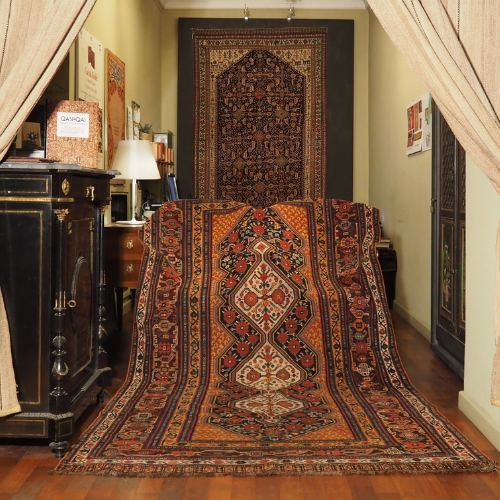
In the world of rug restoration, there are moments that feel like pure privilege—moments when a piece arrives not just as a textile, but as
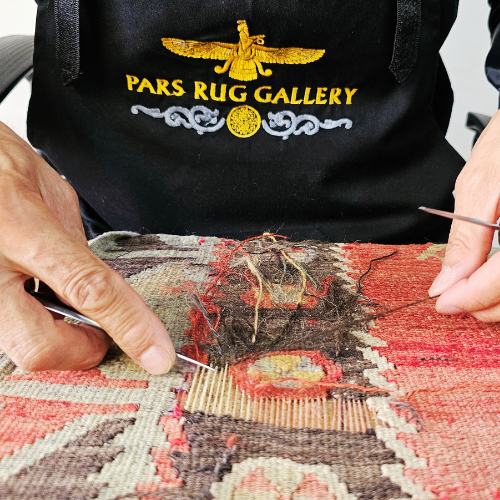
At Pars Rug Gallery, we regularly receive rugs that have journeyed through generations—each one carrying not just fibers and knots, but history, memory, and value.
Rugs possess not only aesthetic beauty but also historical and artistic significance. Whether a timeless Persian heirloom, a finely woven modern piece, or a striking
In the refined setting of a well-appointed home, a rug does far more than simply cover the floor—it becomes a canvas of comfort, character, and